
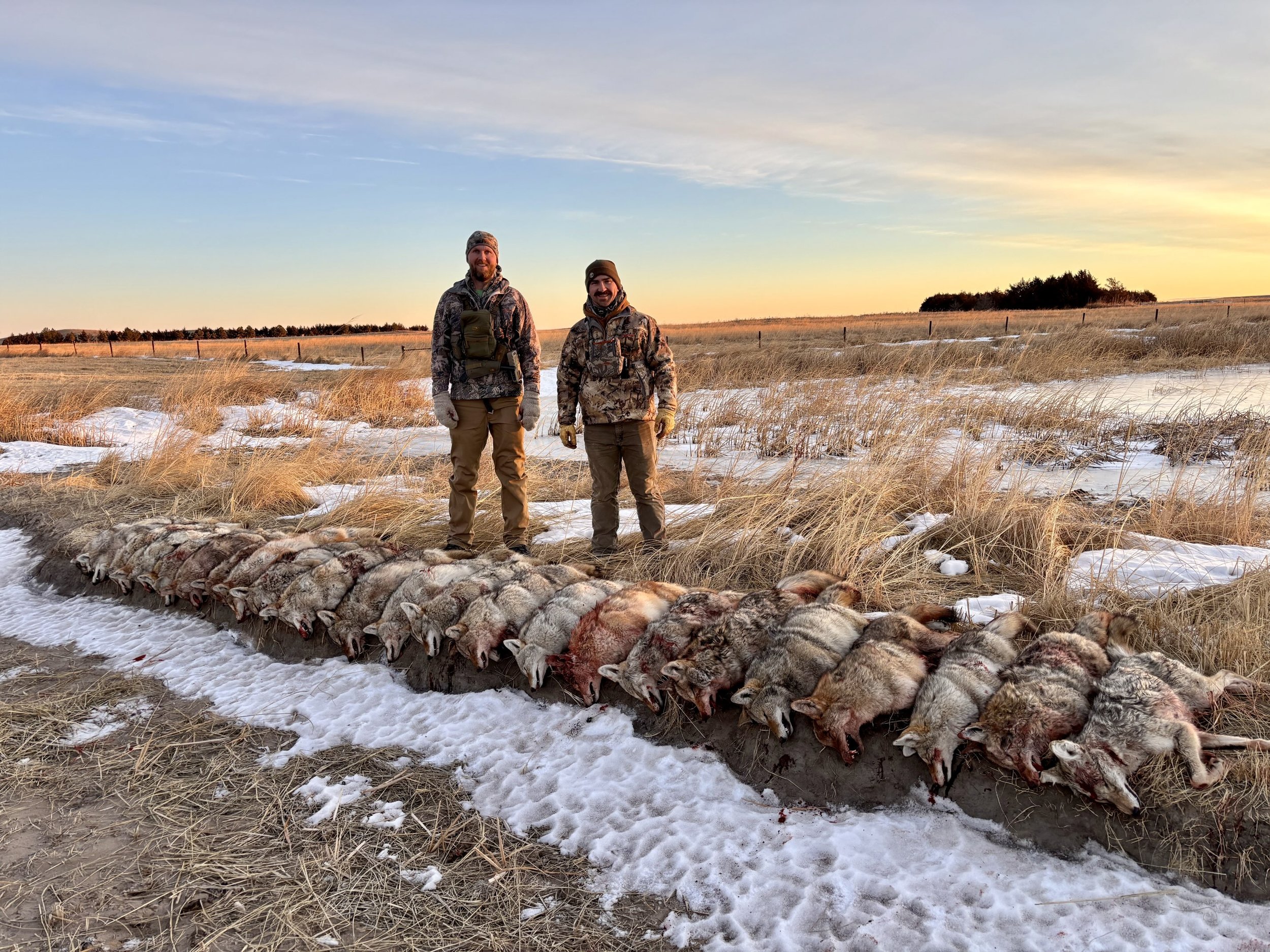
How to Choose a Thermal Scope for Hog and Predator Hunting
How to Choose a Thermal Scope for Hog and Predator Hunting
Choosing a thermal scope can feel overwhelming. Manufacturers promote sensor resolution, lens size, detection range, magnification, image processing, laser rangefinders, and dozens of other features.
The truth is that the most expensive thermal scope is not always the best choice.
The right thermal scope is the one that matches the terrain you hunt, your normal shooting distance, the animals you pursue, and the amount you are comfortable spending.
Start With Your Hunting Environment
Before comparing specifications, consider where you actually hunt.
Hunters working around feeders, creek bottoms, timber edges, and thick brush generally benefit from a wider field of view and lower base magnification. These features make it easier to locate animals and keep moving hogs inside the image.
Hunters covering large crop fields, open pastures, and wide sections of ground may benefit from greater base magnification, higher sensor resolution, and better image quality at digital zoom.
Buying a long-range scope for close-range hunting can make it harder to locate animals quickly. Buying too little resolution can also make it difficult to identify a coyote or hog at longer distances.
Is a 384 Thermal Scope Enough?
A quality 384-resolution thermal scope can be an excellent choice for many hunters.
A 384 thermal scope generally makes sense when:
Most shots are taken at moderate distances
Hunting takes place around feeders or tighter cover
Budget is an important consideration
The optic will primarily be used for hog hunting
Extreme digital magnification is not regularly needed
Resolution is only one part of image quality. The sensor, lens, display, software, and image processing all contribute to what you see through the scope.
A well-designed 384 scope can provide a better hunting experience than a poorly designed optic with more impressive specifications on paper.
When Is a 640 Thermal Scope Worth It?
A 640-resolution thermal scope generally provides more target detail and performs better when digital magnification is used.
A 640 scope may be worth the additional cost when:
Predator hunting is the primary use
Hunting regularly takes place in open country
Shots may extend beyond typical feeder distances
Positive target identification at longer distances is important
One scope needs to cover several hunting environments
For a detailed explanation of sensor resolution, lens size, magnification, pricing, and common hunting applications, read the Thermal Scope Buyer’s Guide from Thermal Bros.
Match the Lens Size to the Terrain
Lens size affects magnification, field of view, and how the scope performs at distance.
Smaller lenses generally provide a wider field of view. This can be helpful when scanning close cover, following groups of hogs, or hunting in areas where animals may appear suddenly.
Larger lenses generally place more emphasis on distance and target detail, but they can also narrow the visible area.
A larger lens is not automatically better. A hunter who normally shoots inside 100 yards may find a wider field of view more useful than additional magnification.
For mixed terrain, a middle-range lens often provides the best balance between field of view and distance.
Detection Range Is Not Identification Range
Thermal manufacturers often advertise very long detection distances.
Detection simply means the optic can show that a heat source is present. It does not necessarily mean the hunter can determine exactly what the heat source is.
Identification distance is affected by:
Sensor resolution
Lens size
Humidity
Fog
Rain
Background temperature
Target size
Image processing
Magnification
A thermal scope may detect an animal much farther away than it can provide responsible target identification.
Always confirm the animal and what is behind it before taking a shot.
Base Magnification Matters
Base magnification is one of the most important specifications to consider.
Lower base magnification provides a wider field of view. This is useful for close-range hog hunting, scanning feeders, and locating moving animals.
Higher base magnification provides a larger initial image and may be more useful for predator hunters working across open fields.
However, too much base magnification can make it harder to find animals quickly at close range.
The best choice depends on the distance where most of your shots actually occur.
Do You Need a Laser Rangefinder?
A built-in laser rangefinder can be valuable, but not every hunter needs one.
For hunting around feeders, trails, or landmarks at known distances, an integrated rangefinder may not be essential.
For predator hunters covering open ground, judging distance at night can be difficult. A laser rangefinder can help confirm whether an animal is 125 yards away or more than 250 yards away.
A rangefinder is worth paying for when the distance information affects shot placement or determines whether a shot should be taken.
Consider Battery Life and Controls
Image quality receives most of the attention, but practical features matter after several hours in the field.
Before buying, consider:
Real-world battery life
Replaceable or rechargeable batteries
Button placement
Ease of use while wearing gloves
Startup time
Video recording
Reticle choices
Mounting system
Warranty coverage
Manufacturer and dealer support
A thermal scope with a strong image can still become frustrating if the controls are difficult to use or the battery system does not fit your hunting routine.
Compare Scopes by Use Case
Instead of comparing every thermal scope available, narrow the choices based on how the optic will be used.
A feeder hunter may prioritize:
Wide field of view
Lower base magnification
Simple controls
Good performance at moderate distances
A predator hunter may prioritize:
Higher resolution
Better performance at digital zoom
More base magnification
An integrated laser rangefinder
Hunters who want to compare current options can view the thermal rifle scope collection at Thermal Bros.
Example of a Compact 640 Thermal Scope
Compact 640-resolution scopes can offer a useful balance of image quality, portability, and field performance.
One example is the RIX Storm S6R 640 thermal scope, which is designed for hunters who want 640-resolution performance in a relatively compact platform.
This does not mean one scope is right for every hunter. It is an example of why shoppers should compare the complete package rather than focusing only on sensor resolution.
Buy for the Job, Not the Specification Sheet
The right thermal scope should make it easier to locate, identify, and engage animals under your normal hunting conditions.
For many hunters, a quality 384 or entry-level 640 scope provides the best balance of price and performance. Hunters regularly covering open ground may benefit from a stronger 640 platform.
Premium thermal optics can be impressive, but they are not necessary for every hunter, property, or shooting distance.
Start with your terrain, typical shot distance, and intended use. Then choose the resolution, lens size, magnification, and features that support those needs.